Category: FinTech

  • GhiPSS boss advocates Technology Regulator for ICT sector

    GhiPSS boss advocates Technology Regulator for ICT sector

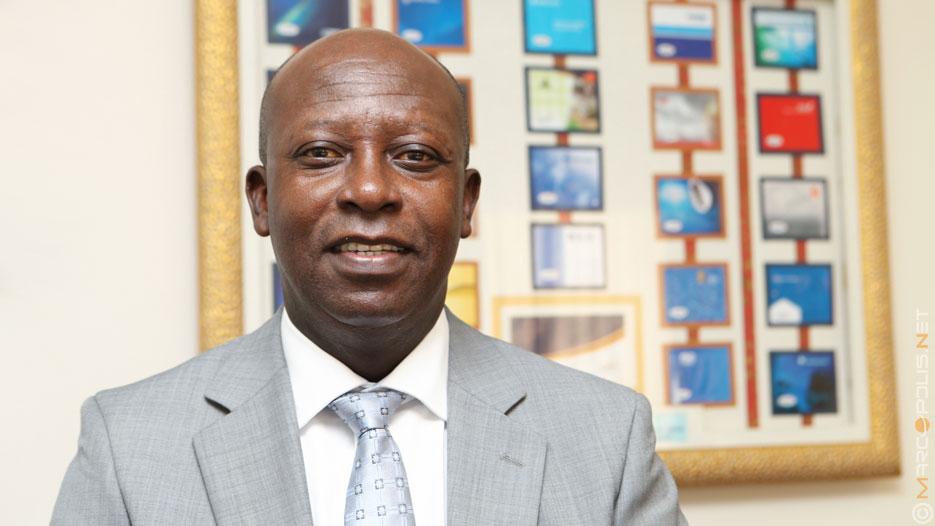
    The Chief Executive Officer of the Ghana Interbank Payment and Settlement Systems (GhiPSS) Limited, Archie Hesse has called for a Technology Regulator to control Information and Communication Technology (ICT) applications and infrastructures.

    He explained that the regulator would ensure that the soft and hard ICT infrastructures, as well as products and services, to ensure they were foolproof and met international standards.

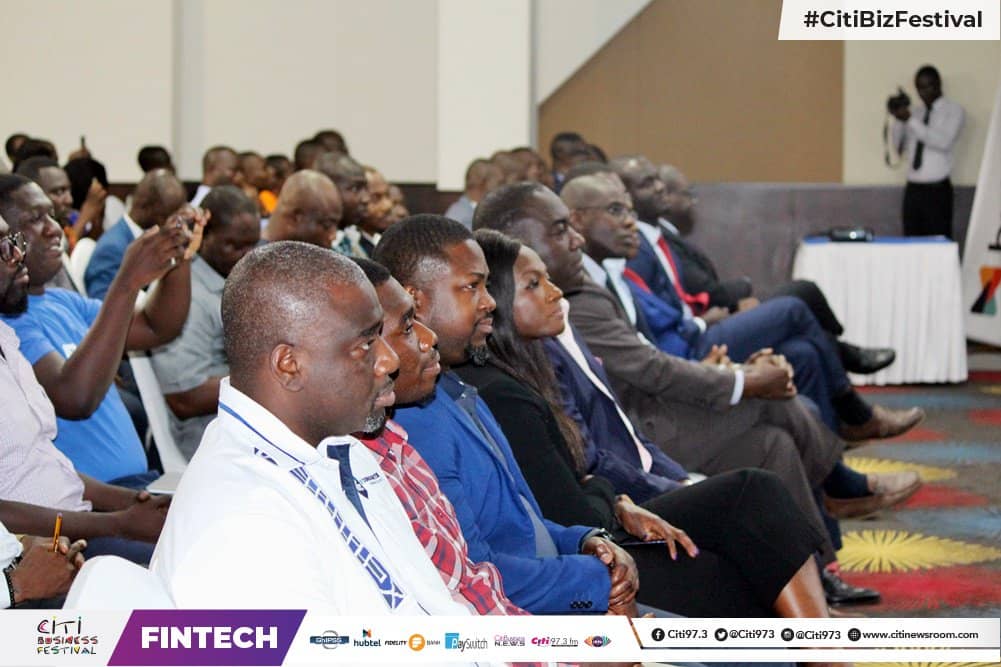
    Mr Hesse made the call at a Fintech Summit in Accra on Friday organised by the Accra-based English Radio Station, Citi FM.

    The programme formed part of the station’s business festival under the theme “The Future of the Financial Technology Ecosystem in Ghana”.

    It was under the auspices of GhiPSS, Hubtel, Fidelity Bank, Payswitch.

    Mr Hesse said Europe and Asia have technology regulators and Ghana could also do same.

    Touching on the topic of the programme, he said, Fintech meaning financial technology was about automating the processes and transactions of the banks.

    “Fintech is nothing new.  It is an old phenomenon that has caught up with us,” he said, stressing “Fintech helps do things better and promote synergy,” he said.

    The Head of Payment Systems at the Bank of Ghana (BoG), Dr Setor Amediku said the BoG was developing a law to regulate the Fintech Industry.

    He said since the Fintech held cash, there was the need to regulate them to promote financial and price stability.

    Dr Amediku said there was the need for the law to protect the cyber and data security of individuals and companies.

    Currently, there were 71 Fintech companies in the country.

    Dr Amediku said financial inclusion had increased from 41 to 58 per cent, saying the objective of the government was to achieve 75 per cent financial inclusion by the year 2020.

    The Chief Executive Officer of Hubtel, Alex Bram said though regulation was good, over regulation would stifle the industry.

    He said Fintech was breaking the bureaucracy in accessing services from the state, and urged the state institutions to embrace technology to improve on their services.

    Technology, Mr Bram said was bringing convenience and value to the lives of individuals.

    The Chief Technology Officer of Payswitch, Emmanuel Osei-Akoto said Fintech was breaking the barriers of banking and giving opportunity to access financial services.

    He said banks should be service providers and a storage house of money, saying banks should deploy a system in which they could order goods for their customers.

    The Director of Strategic Partnership, Dr William Derban said banks had always embraced technology in their operations, saying the adoption of Automated Teller Machines and other systems were part of technology.

    He called for stronger partnership among the banks, telecom companies and the banks to promote the Fintech industry.

    The Chief Executive Officer of Rancard, Kofi Dadzie said Fintech was nothing new and came about through the operations of banks.

    He said Fintech companies bring innovation and disruptions in the technology sector, indicating that Fintech would be the future of banking as it would provide easy and cheap capital to the entire citizenry.

    Source: The Ghanaian Times
  • Financial experts call for regulation of Fintechs at #CitiBizFestival

    Financial experts call for regulation of Fintechs at #CitiBizFestival

    Participants at the Financial Technology Summit organised as part of the Citi Business Festival have emphasized the need to create a financial ecosystem that will guarantee the safety of funds with financial technology (fintech) companies.

    According to them, the changing phase of technology makes it imperative for some level of regulation to enhance the security of electronic transactions in the future.

    The panel at the summit was made up of the Head of Payment Systems, at the Bank of Ghana, Dr. Setor Amediku, the CEO of Ghana Interbank Payment and Settlement Systems (GhIIPSS), Mr. Archie Hesse, the CTO of PaySwitch, Emmanuel Osei Akoto, the CEO of Rancard Solutions, Kofi Dadzie, the CEO of Hubtel- Alex Brahm, and William Derban from Fidelity Bank.

    Discussing the topic the Future of Financial Ecosystem in Ghana, most members of the panel stressed the need for some supervision.

    For the CEO of Rancard Solutions, Kofi Dadzie, the central bank would have to catch up with the speed of innovation since electronic transactions will change the phase of the country’s payment system in the future.

    He warned that the type of disruption that will hit the fintech industry may not necessarily come from big organisations whose activities are constantly being monitored by the regulators.

    “We will not see the pace of innovation that we need coming from large state organizations and from large corporate, simply because of the type of regulation and the space in which they operate and the nature of large organization”.

    According to him, the Bank of Ghana must do more than just setting regulations for fintechs and incorporate their activities into the operations of the financial system.

    On his part, the CEO of Hubtel, Alex Bram, cautioned that the level of regulation will depend on the nature of transaction undertaken by fintechs.

    Meanwhile, the Head of Payment Systems at the Bank of Ghana, Dr. Setor Amediku stated that the payment systems are too critical for the stability of prices, hence the Bank of Ghana will be tough in regulating the area to prevent a collapse of the financial system.

    Dr Amediku maintained that the non-existence of proper regulation to supervise the activities of fintechs could distort the financial system, affecting economic stability.

    He, therefore, urged the fintechs and telcos to take a six months window of opportunity created by the Bank of Ghana to upgrade their security system to meet a new requirement that will soon be passed into a law.

    “I think you are all aware that we have not regularized MTN Mobile Money, Vodafone Cash, Airtel Tigo Cash and the fntechs. So you have a window of opportunity of six months to put their house in order to meet the minimum cybersecurity regulations”.

    Dr Amediku warned that the BoG will not allow the system to be abused like it happened in the microfinance industry, leading to the loss of millions of cedis.

    The CEO of GhIPSS, Mr Archie Hesse maintained that the growth of fintechs shows that there must be more collaborations between fintechs, regulators and financial institutions.

  • BoG putting in strategy to combat fraud in E-payments and Mobile Money

    BoG putting in strategy to combat fraud in E-payments and Mobile Money

    The Bank of Ghana (BoG) has said that it is working tirelessly this month to stop fraud-related activities in the country’s payment systems.

    The First Deputy Governor of the Bank of Ghana, Maxwell Opoku-Afari, told Accra-based Citi FM that they are engaging the banks and telcos in order to implement the said measures.

    Mr Opoku-Afari assured that “the Payment Systems Department of the BoG is regularly engaging banks and telcos that are operating E-Payments and Mobile Money transactions to try to work within guidelines and framework to ensure the safety of consumers.”

    “As we use this platform in this ecosystem to drive financial inclusion we also have the protection and the stability of the financial system in mind so that whatever we do is geared towards protecting the consumer,”

    He explained that the launch of the mobile interoperability platform brings the country’s payment system under a new area which requires the needed legislation to protect consumers.

    He assured the general public that the Bank of God will always protect people in the payment ecosystem to enhance confidence in the financial sector.

    He was of the view that the need to protect and enhance confidence in the payment systems will also encourage government’s aim of achieving financial inclusion.

    Source: Pulse Ghana

  • More People are using Mobile Money to pay for retail services

    More People are using Mobile Money to pay for retail services

    The value of retail payments (excluding cash) increased by 43.18 per cent to GH¢381.43 billion in 2017 from GH¢266.39 billion in 2016.

    This growth in the value electronic retail payments for the year under review, 2017 was driven largely by the increase in the value of mobile money services and e-zwich.

    This is according to a report by the Bank of Ghana. The report titled “PAYMENT SYSTEMS OVERSIGHT ANNUAL REPORT, 2017” chronicled the varied ways in which transactions carried out in the Ghanaian market are paid for.

    The report highlights the many payment systems and forms in Ghana and how the use of digital payments is transforming the payment space.

    The report also touches on the critical role financial technology firms popularly known as FINTECH firms are playing in the provision of payment systems or a means of carrying out payment for transactions. They also provide an array of services to the banking sector. Currently, there are 71 FinTech firms in Ghana

    Mobile money which is one of the most popular and widely used mans of electronic payments has overtaken cheques as the main non-cash retail payment instrument with 981.6 million volume of transactions, followed by Debit Card (60.4 million), e-zwich (8.4 million), cheques (7.3 million) and Direct Credit Transfer (6.1 million) in 2017.

    However, in terms of the value of transactions undertaken in 2017, cheques continued to maintain its lead with GH¢179.6 billion while mobile money followed closely with GH¢155.8 billion.

    So the implication here is mobile money leads in terms of its usage as a means of payment for goods and services in the retail space followed by debit cards, e-zwich, cheques and direct credit transfer.

    However, in terms of the total amount of monetary value of these payment systems in the retail space, cheques led the lot. Which will imply the monetary amount of cheque transactions is still higher than its peers.

    The significant growth in digital payments as a preferred means of transacting retail cash payments according to the report can be attributed to conscious efforts by Government and Bank of Ghana to promote digital payments as an alternative to cash; and customers demand fast, convenient and efficient payments.

    Other developments in the payment systems space
    The report also captures a number of developments during the year under review such as the introduction of a number of legal and regulatory reforms such as the Payment Systems and Services Bill which was submitted to the cabinet through the Ministry of Finance for onward transmission to parliament.

    The Bill made provision for cybersecurity regulations and adherence to Information and Communication Technology standards to minimize cyber risk, airtime use for payment of insurance premium, agent registry, mobile money interoperability, migration of magnetic stripe cards to EMV standard and support for National Identification Authority.

    Digital/Electronic products and services
    The report also looked at the products and services developed by banks in collaboration with other payment systems providers. These products range from automated teller machines (ATMs) for Rural and community banks (RCBs) to broaden their base to products that enable unbanked to purchase Government of Ghana domestic fixed income bonds using mobile money wallets

    Financial Inclusion
    The government in collaboration with key stakeholders including the Bank of Ghana developed a draft National Financial Inclusion Development Strategy (NFIDS) framework.

    The document was developed by the government of Ghana with technical assistance from the World Bank in collaboration with relevant key stakeholders including Bank of Ghana, National Insurance Commission, and the Pensions Regulatory Authority.

    The National Financial Inclusion and Development Strategy (NFIDS) framework aims at increasing access to formal financial services at affordable cost for the adult population. It is envisaged that it would increase financial inclusion from 58 per cent to 75 per cent by 2023.

    Source: Philip Nanfuri | JoyBusiness

  • Non-Compliant Fintechs in Ghana To Lose Licenses soon

    Non-Compliant Fintechs in Ghana To Lose Licenses soon

    The Bank of Ghana will revoke the license of any financial technology company that fails to comply with regulatory requirements outlined in the new payment systems and services bill.

    The FinTechs are expected to be compliant at a time where electronic payment systems are increasing significantly.

    This caution is also contained in the Bank of Ghana’s 2017 Payment systems report.

    The Bank of Ghana explains that the decision to withdraw the licenses is necessary following the potential risks such FinTechs may pose to the financial sector when left unregulated.

    Currently, there are seventy-one (71) FinTechs operating in Ghana.

    According to the central bank, a FinTech may be deemed qualified to sustain its operations if it complies with three broad directives including; tech, security and controls, governance arrangements as well as principles of consumer protection.

    For tech, security and controls, a FinTech is expected to possess a tested technology system which is equipped with fraud monitoring and detection tools; a valid third-party certification from a reputable certification authority in line with relevant standards determined by the Bank of Ghana.

    Also, complying with governance arrangements means that the FinTech is required to have a board of directors with a minimum of five members, at least three of whom, including the chief executive officer, shall be resident in the country.

    Again, the company must disclose to the Bank of Ghana details of its external auditors and any relation to the directors, key management personnel or shareholders.

    Meanwhile, fin techs are expected to be transparent and disclose to their customers, clear, sufficient and timely information on the fundamental benefits, risks and terms of any product or service offered in an objective and accessible form.

    Already twenty-one (21) banks are in partnerships with the FinTechs for the provision of services.

    The Payment Systems and Services Bill is currently before cabinet. It is expected to be forwarded to Parliament and subsequently passed into law.

  • The best way to buy MTN Shares in Ghana and Make Profit

    The best way to buy MTN Shares in Ghana and Make Profit

    The largest telecom operator, MTN, has launched an Initial Public Offer aimed at raising 3.47 billion cedis from shares.

    Every Ghanaian has the opportunity to own shares in the company. Priced at GHC 0.75 per share, they must be purchased in multiples of 10, with a minimum subscription of GHC 7.50 which is the cost of 10 shares.

    The shares can be bought through mobile money by dialling *170# and selecting option 7; through the MTN website by entering the URL mtnghanashares.com, or by buying through selected MTN Ghana branches, IC Securities (Ghana) Ltd, any of MTN’s selected banks or any licensed stock broker of the Ghana Stock Exchange. The offer is for two months, starting at 12.00noon on Tuesday, 29th to 31st July 2018.

    The Vice President of South and East Africa and also the CEO of MTN Ghana, Mr Ebenezer Twum-Asante, noted that MTN’s listing of shares was in fulfilment of a requirement by the Regulator when it was given the right to use a 4G spectrum that can carry high-speed mobile data for customers.

    With a subscriber base of 17.8 million, representing 47.6% market share, Mr Twum-Asante estimated that MTN was, directly and indirectly, responsible for about half a million sustainable jobs.

    He said that the company was also contributing its quota to the development agenda of the country. In 2017, he said, MTN paid GHC 1,218 billion as taxes to the government.

    Mr Twum-Asante said that as the first step in providing digital solutions, the business division of MTN had rolled out fibre to over 14,000 homes within one year.

    He said that MTN had 11.6 registered wallets and a 93.9% market share of mobile money float. He said that checks from GSMA confirmed that this is the first time in Africa or the world over that mobile money will be used to buy shares in an IPO and subsequently trade them.

    The launch of the IPO was performed by the Minister of Finance, Mr Ken Ofori-Atta and the CEO of MTN Ghana, Mr Ebenezer Twum-Asante.

    How to Buy MTN Shares with Mobile Money

    1. Dial *170# to access the Mobile Money Menu
    2. Select option 7 (Buy MTN Shares
    3. If you are sure you have gone through the prospectus on mtnghanashares.com, select option 1 (Yes) to accept the terms and conditions
    4. Select option 1 to buy new shares
    5. Enter the number of shares you want to buy in multiples of 10 (Example: 10, 20, 40, 60, 1000, 2510, etc)
    6. Choose why you invest (For Savings, For Income or Both)
    7. Confirm the number of shares you want to buy and the cost
    8. Once you have enough balance in your account, an MTN Mobile Money Prompt will appear
    9. Choose option 1 (Yes)
    10. Enter your Mobile Money Pin to confirm share purchase
    11. You will receive a message to confirm the whole transaction

    How to make Profit from buying MTN Shares

    You don’t need much money to buy MTN’s shares. Starting at GHS 7.5, you can own some shares. However, to make a profit from the shares, you need to invest some more. Also, when MTN’s shares increase in value, the value of the money you invested in the shares goes up. You can then sell the shares at a higher price to make money or you can keep them and keep enjoying dividend on them.

  • 2018 Ghana Information, Technology & Telecom Awards to focus on FinTech

    2018 Ghana Information, Technology & Telecom Awards to focus on FinTech

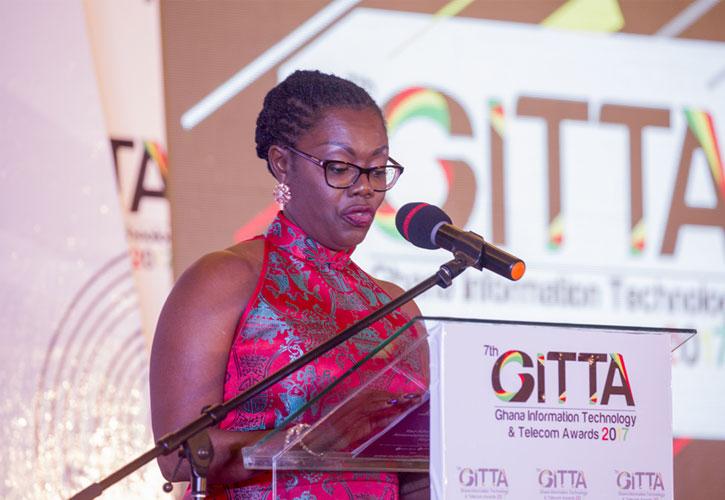
    The 2018 Ghana Information, Technology & Telecom Awards in its 8th year is set to honour leading players in the Fintech industry.

    The emergence of Fintech in Ghana has sparked a tremendous increase in domestic and cross-border payments. And Fintech firms operating in the country are contributing greatly towards digitizing the Ghanaian economy with the introduction several solutions for the banking and telecoms industries.

    More so, the sector has received some wide-spread attention from micro-insurance; with leapfrog Investments of over $15 million in Ghana’s insurance sector since 2012, making it one of the leading portfolios on the African Continent.

    “Hence we have expanded our categories for this year’s awards to recognise the innovation and outstanding service of top Fintech Companies and solution providers who are contributing immensely to the digitization of Ghana’s Economy.” Akin Naphtal, CEO of Instinct Wave, organisers of GITTA stated categorically.

    According to him, since 2010, The Ghana Information Technology & Telecom Awards has been shining a light on the most progressive and innovative companies within the ICT ecosystem.

    “We are proud to promote success stories, technology advancement and disruption in one of the most dynamic business sectors in Ghana. Not only do we look at businesses, but also individuals who have made a genuine impact on the market from within these companies.” He said.

    GITTA is the most celebrated industry awards which have grown to be the ‘Oscars’ of the ICT and Telecom industry attracting the crème de la crème and top decision makers in the sector.

    This year, the awards night will be held at the Mövenpick Ambassador Hotel on 29th June 2018.

    The awards night provides an exceptional opportunity for stakeholders to network, entertain clients, and reinforce relationships with partners and reward staff with exceptional performance.

    Source: Carol Opata – Hogan/GhanaWeb

  • Ghanaians Sign On To MTN Mobile Money To Make Pension Contributions

    Ghanaians Sign On To MTN Mobile Money To Make Pension Contributions

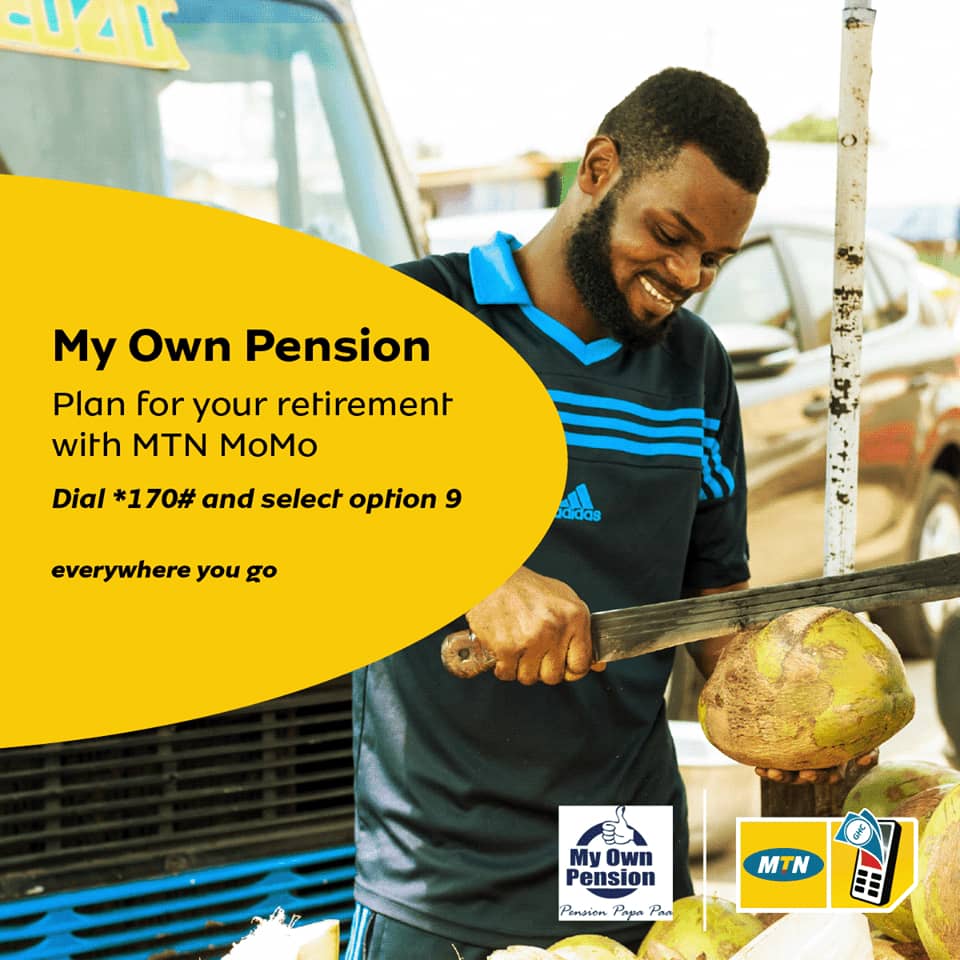
    Close to 100,000 Ghanaians have subscribed to making personal pension contributions through MTN Mobile Money and United Pensions Trust’s personal pension scheme dubbed ‘My Own Pension’.

    With over 80 per cent of Ghana’s labour force being in the informal sector, ‘My Own Pension’ which is a tier 3 mobile pension and savings product is expected to create an opportunity for more Ghanaians to have a structured pension system. ‘My Own Pension’ reiterates MTN Ghana’s commitment to engendering financial inclusion, social protection and the improvement of living standards for Ghanaians from all sectors and diverse economic backgrounds using technology. The service was launch in Accra in May in partnership with Fidelity Bank and Bora Capital Advisors.

    Commenting on the progress made so far after the launch, Mr. Eli Hini, General Manager for MTN Ghana Mobile Financial Services said, “We are very satisfied with the response received so far from the public, and this tells us that we are gradually achieving success with our quest to drive financial inclusion in Ghana”. “As the leader in the Telecoms Market, we will continue to collaborate with like-minded organizations to make our customers lives a whole lot brighter” he added.

    The Chairman for United Pensions Trustees, Mr Harold Awuah-Darko encouraged persons who are yet to sign onto the scheme to do so and enjoy the benefits it provides. He said, “The more you invest in your pension, the more money you would have working for you and as a result, you generate more returns.” Mr Awuah-Darko also commended MTN for sharing in their vision of making pensions available to everyone everywhere.

    The intervention by MTN Ghana, United Pension Trustees and the key partners was also applauded by the Director General of Management Development and Productivity centre, Mr KwakuOdame- Takyi who spoke on behalf of the Minister for Labor Relations Mr Ignatius Baffuor Awuah at the launch. He said,“Government is very supportive of any initiative that aids in fulfilling the National Pensions Act, 2008(Act 766) and drives inclusivity for everyone especially those in the informal sector.”

    ‘My-Own Pension’ scheme is fast, easy and affordable and has optional products ranging from life, health and motor insurance which can be arranged for interested clients. Contribution to the scheme begins with as low as GHS 1 daily, GHS 5 weekly and GHS 20 monthly. There is also the option of doing voluntary payments where a contributor’s chosen contribution is automatically deducted at the end of the selected frequency through his/her MTN Mobile Money account. To subscribe to the service, MTN

    Mobile Money subscribers will have to dial *170#, select Pension and Insurance, select MY OWN PENSION, and continue to follow the steps.

    MTN Ghana is committed to providing its customers with a brighter life through innovative services that enable them to live a connected lifestyle.

  • Mobile Money Interoperability: What it means and what you should know

    Mobile Money Interoperability: What it means and what you should know

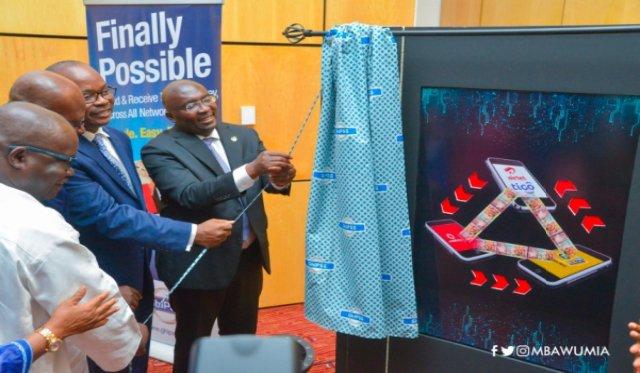
    Today, the Vice President Dr Mahamudu Bawumia has launched the first mobile money payments interoperability system in Ghana.

    Interoperability is the ability for customers to undertake money transfers between two accounts at different mobile money companies or to transfer money between mobile money accounts and bank accounts.

    In what appears to be phase one, Mobile money customers in Ghana will now be able to send and receive money directly to and from each other irrespective of the network.

    Phase Two of the interoperability platform will complete the Financial Inclusion Triangle by allowing the movement of monies between and among Telcos, banks, and e-zwich accounts in a seamless manner – and the flow is back-to-back.

    What is Mobile Money Interoperability (MMI)?

    MMI is a service which allows direct and seamless transfer of funds from one mobile money wallet to another across networks.

    Why is it important to have MMI?

    Prior to the introduction of MMI, mobile money operators largely operated as closed platforms. Users of one network could not directly transfer money to users of other networks. This required Mobile money users to own multiple phones to transact across networks.

    MMI will, therefore, enable Mobile Money users of one network to directly and seamlessly send money to other Mobile Money users on other networks.

    What are the benefits of the Mobile Money Interoperability (MMI) service?

    • Create convenience for Mobile Money users
    • Drives financial inclusion
    • Lower cost of transactions
    • Increase service reach
    • Reduces reliance on cash
    • 24/7 Access to funds in wallets and bank accounts
    • Ease of moving funds between wallets and bank accounts
    • Ease of receiving and making payments for goods and services

    How can I use the service?

    MMI service has been integrated into the existing Mobile Money service. Simply dial your existing Mobile money shortcode to access the service. The shortcode also provides users with all MMI functionalities.

    How to access MMI on MTN Mobile Money?

    1. Dial *170#
    2. Select Transfer Money
    3. Select Other networks

    NB: You can select any of the networks below:

    • Tigo Cash
    • Airtel Money
    • Vodafone Cash

    You can also perform a transfer to a bank account which is on the GHIPPS platform. You can perform the following:

    • Wallet to Bank Account
    • Bank Account to a wallet

    Once you select any of the options, you will see a list of participating banks. You will be requested to input the bank account number and proceed with the steps to complete the transaction.

    The bank services are currently not activated. Updates will be provided in due course.

    How do I verify the owner of the wallet or Bank Account I am sending money to?

    For every transfer, you will be requested to input the account number twice and at the end of all the entries, the system will return with the name of the customer for confirmation before you enter your pin to complete the transaction.

    Who qualifies for this service?

    The service is available to ALL existing and future mobile money subscribers.

    Do I need an additional PIN to use this service?

    A subscriber will use their existing Mobile Money PIN to authorize all transactions to other networks.

    How much money can one transfer?

    A subscriber can transfer as per their current daily limit allowed on their wallet.

    What are the transaction fees?

    Amount (GHS) Fee Remarks
    GHS 1 – GHS 50 GHS 0.75 Flat Fee
    < GHS 50 – GHS 1,000 1.5% 1.5% of Value
    < GHS 1,000 – GHS 5,000 GHS 15 Flat Fee

    Who do I contact for more information?

    The customer must use the existing MTN support channels, ie. 100 or visit the MTN Service Centre.

    What do I do if something goes wrong with a transaction?

    Call the call centre of your mobile money service provider for assistance. MTN customers will call 100 or visit any MTN service centre for assistance.

  • Long Overdue: Ghana to be fully Paypal-compliant by 2020

    Long Overdue: Ghana to be fully Paypal-compliant by 2020

    Ghana has concluded discussions with renowned online payments system Paypal and will, therefore, if all goes well, become one of the Paypal-compliant countries soon, Vice President Dr Mahamudu Bawumia has announced.

    The Vice President made the announcement at the launch ceremony for the first phase of the first mobile money payments interoperability system in Ghana in Accra on Thursday 10th May 2018.

    Online payments system Paypal supports online money transfers and serves as an electronic alternative to traditional paper methods like cheques and money orders. The company operates as a payment processor for online vendors, auction sites, and other commercial users, for which it charges a small fee in exchange for benefits such as one-click transactions and password memory.

    To be implemented in two phases, Ghana’s entry into the Paypal system is expected to be completed by the first half of 2020 and forms part of Government’s ongoing efforts to build a new and modern economy.

    According to the roadmap presented by Paypal, by the second half of 2019, Ghanaian merchants should be able to receive payments for their goods sold online. By the first half of 2020 Ghanaian consumers would be able to make payments for goods and services purchased online via Paypal accounts.

    “It is now up to us, the Bank of Ghana, GHIPSS, Banks, Fintechs, Telcos and Merchants to make this happen within this time frame and also to prepare for the opportunities it presents,” Dr Bawumia urged, adding, “I would ask that GHIPSS puts together a working group of stakeholders to work to implement this roadmap.”

    “This presents exciting opportunities for Ghana” the Vice President continued, “and we should take full advantage of it. We should see, amongst other developments, a major boost in e-commerce in Ghana. We are building a new and modern economy.”

    The launch of the first mobile money payments interoperability system in Ghana is also in furtherance of Government’s drive for a new and modern economy, according to Vice President Bawumia.

    It is expected to largely eliminate the difficulties associated with traditional banking services, such as the difficulty in opening bank accounts, the high costs associated with maintaining a bank account relative to customers’ income levels, the need to have basic literacy, administration and record keeping abilities and English-language capacity to operate a bank account, and the sheer intimidating nature of banking halls.

    Following the launch, customers will be able to move freely monies from mobile money to mobile money accounts across different networks. This means that customers who have mobile money accounts with say, MTN can easily transfer or receive money from other networks such as Airtel-Tigo or Vodafone.

    Furthermore, mobile customers can move money from their mobile money accounts to bank accounts without any hassle, freeing up funds locked up in the telecom sector.

    As well, from the bank side customers can move money from their bank account(s) to mobile money accounts.

    According to Fintech experts, this will make Ghana one of the global leaders in the interoperability payments space.