Category: FinTech

  • MoneyGram and Zeepay just made remmitance to mobile wallets in Ghana possible

    MoneyGram and Zeepay just made remmitance to mobile wallets in Ghana possible

    Cross-border payments brand MoneyGram is now working with Ghanaian fintech Zeepay to provide remittance services to mobile money users in Ghana.

    The service, according to MoneyGram, will make it possible for customers to send funds to any mobile wallet in the country. This includes MTN Mobile Money, Vodafone Cash, Zeepay wallets, and the AirtelTigo Money Wallet.

    MoneyGram and Zeepay inked an agreement to launch the service in the country with the Director for Africa at MoneyGram John Gely signing the deal on behalf of the company.

    Zeepay Ghana Limited’s Managing Director Andrew Takyi-Appiah told reporters that their partnership with the money transfer company is a response to the wide use of technology in the country. Takyi-Appiah added that it will contribute to financial inclusion, a major challenge for many people in Ghana.

    The government is keen on improving banking for its citizens, according to reports, considering that around 50% still remain unbanked.

    Based on an interview with Ghana’s Finance Minister Sampson Akligoh, the government wants to achieve 90% financial inclusion by 2020.

    The Finance Department recently approved a bill promoting payment systems and services. The development will reportedly be presented for ratification soon.

    Zeepay and MoneyGram’s partnership will not only make sending money to Ghana a lot cheaper and more accessible, it will also pave the way for other fintechs to enter the country, observers say. MoneyGram’s Regional Director in West Africa Patrick Appiah said that the brand desires to be at the forefront when it comes to digital financial services.

    Africa remains one of MoneyGram’s key markets. In 2017 alone, Ghana received a whopping $2.2 billion in remittances, an amount that increased an estimated 4.3% based on numbers from the year before.

    According to World Bank data, Ghana ranks as the fifth largest recipient of remittances in the continent. Remittances going to the country come from migrants living and working in Nigeria, the United Kingdom, Italy, Germany and the United States.

  • Ghana is 2nd Worldwide in Search for Bitcoin online

    Ghana is 2nd Worldwide in Search for Bitcoin online

    The US dominates the markets for Bitcoin in terms of trading volume, a number of exchanges, ICOs, and other such blockchain-related statistics.

    However, many wouldn’t know that it falls behind in search interest. Japan is also highly ranked amongst the most crypto-friendly nations. But, when it comes to search interest on Google, both these countries fall far behind lesser developed nations like South Africa and Ghana.

    Google Trends data reveals that, so far in 2018 (YTD as of September 3rd, 2018), South Africa leads ‘Bitcoin’ search interest. Ghana stands second with Slovenia third.

    Google Trends ranked these nations on the basis of a scoring system on a scale from 0 to 100.

    Here, 100 is the location with the most popularity as a fraction of total searches in that region. Similarly, 50 indicates a region with half the popularity. Regions with not enough data for the term are assigned a value of 0.

    South Africa, with a 100 score commands almost double the search interest of the term ‘Bitcoin’ in the US, where the score stands at 52. Ghana is second with 75 along with Slovenia (also at 75). Japan scored the lowest, with just 2 points.

    Other prominent nations such as Switzerland, the UK, and Hong Kong, scored 59, 44, and 37 respectively. Saudi Arabia scored 13 and Russia 7.

    In the beginning of the year, Bitrazzi highlighted how Bitcoin bulls against the dollar doves indicate an opportunity for Africa to lead the case for implementing Bitcoin as a global reserve currency.

    In April, they highlighted 4 of the many use cases where blockchain is already transforming Africa.

    The bottom line is that the African continent does hold a lot of potential and promise for blockchain and its flagship cryptocurrency, Bitcoin.

  • BitSiki pauses Bitcoin transactions; resumes selling after August 30, 2018

    BitSiki pauses Bitcoin transactions; resumes selling after August 30, 2018

    Bitcoin exchange BitSika was launched in Ghana, enabling users to buy large and small sums of bitcoin instantly via web or USSD.

    Launched earlier this year, BitSika allows both connected and unconnected people to buy and sell bitcoin, and also acts as a wallet service.

    The bootstrapped startup is in the process of raising a US$100,000 seed round which it hopes will fund its mission to lead Ghana’s crypto space.

    Founder Atsu Davoh said the team had been encouraged by the early uptake of the platform.

    “In less than two days, there were over 200 requests to join. The team anticipated 20. The increasing number of new users meant that we had to increase the RAM of our web server to handle the traffic”

    “BitSika also ran out of free bitcoin wallet addresses to give out to new users because we had exhausted all the addresses given to us by the API startup. We refused to charge users for addresses because that was not part of the initial plan. Users kept coming in and their orders kept increasing past what was normally allowed through MTN mobile money.”

    Due to the fundraising activities, the site has paused selling bitcoins. The site is, however, active for all users to test all features of BitSika.

  • Ghana E-commerce Awards: Nominations end today

    Ghana E-commerce Awards: Nominations end today

    Organizers of the maiden Ghana eCommerce Awards, OML Africa, have announced that nominations’ deadline date of 22 August 2018 will not be extended. Therefore, individuals and companies who fall within the various award categories are encouraged to file their online nominations on the event website www.ghanaecommerceawards.com.

    According to a spokesperson of the organizers, “We have already been overwhelmed so far by the number of nominations received for these important awards that are designed to recognize and celebrate excellence and innovation in Ghana’s e-commerce, digital payments, mobile money and fintech ecosystem. The Ghana eCommerce Awards will also boost confidence in doing online transactions and encourage major players to adopt best practice”.

    “Our passion and prediction of a boom in e-commerce have remained on course and its only appropriate for OML Africa to organize this landmark event to reward deserving winners in the e-commerce industry which could represent 75 billion dollars across Africa and could account for 10% of Africa’s retail sales by 2025”, he concluded.

    After nominations for this year’s awards are collated, an independent panel of 5 selected judges comprising Professor Atuahene-Gima (Founder, Noble International Business School); Dr Kajsa Hallberg-Adu (lecturer, Ashesi University and Founder, BloggingGhana); Stephen Nana-Osei Boadi (Chief Digital Enabler, Enable Growth Africa); Berthold Gadagbui (Head, Mobile Banking, Ecobank) and Anita Wiafe-Asinor (Owner, Delilah Secrets & savvy online shopper) will choose finalists for each category based on a pre-selection criteria.

    Some award categories are Best Online Retailer, Best Fintech Company, Best Fintech Innovation, Best Small Independent Retailer, Best Sin-Store Initiative, Best Online Retail Marketing, Best Site Optimization & Design, Best Mobile eCommerce and Best Online Real Estate Site.

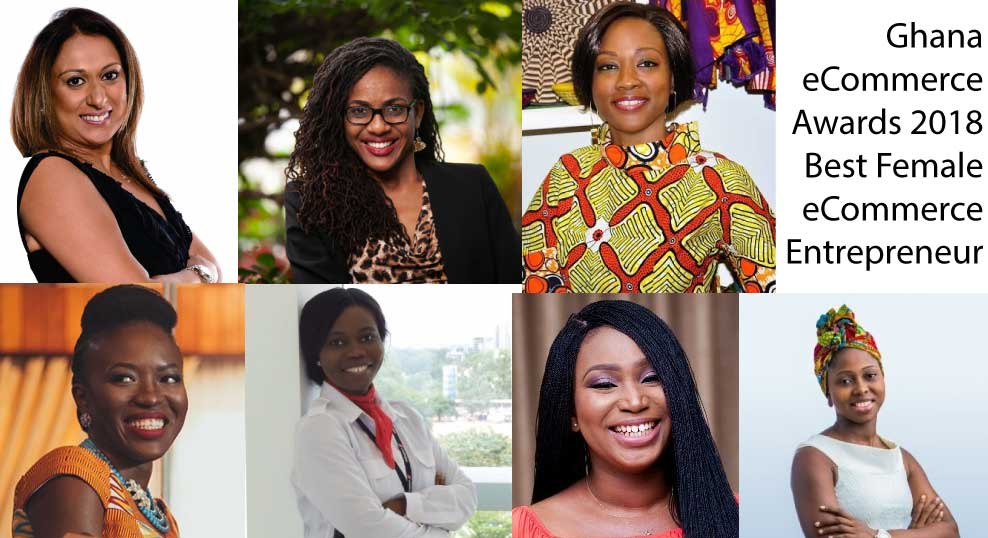
    Others are Best Social Media Campaign, Best Omni Channel Customer Service, Best Delivery/Courier Service eCommerce, Best Female eCommerce Entrepreneur, Best eCommerce Banking App, Best eCommerce Payment Company and Best eCommerce Innovation.

    The rest are Best Internet Service Provider, Best Innovation in eCommerce (Payments), Best Online Food Delivery Platform, Best Online Hotel Site, Best Online Betting Site, Best Bitcoin Company and Best Online Retailer (Electronics).

    These prestigious awards for Ghana’s online business industry are also to boost the ever-increasing trend of consumers going online to shop and doing so, more safely and conveniently. It will also augment government’s efforts in making Ghana a cashless society and contribute immensely to achieving “The Ghana beyond Aid” Agenda as e-commerce is rapidly becoming an increasing contributor to the GDPs of African countries.

    The organizers, OML Africa, have the pedigree as a pioneer in organizing high-quality exhibitions and conference in Ghana’s e-commerce space, having held four Ghana eCommerce Expositions, which have been the hub for the online business community since 2013!

  • MTN Ghana Launches Mobile Money Month 2018 at Kasoa

    MTN Ghana Launches Mobile Money Month 2018 at Kasoa

    Telecommunication giant, MTN Ghana has urged for more acceptance of the cashless mode of transactions so the country can reap the numerous benefits associated with digitized payments.

    Speaking at the launch of the 2018 Mobile Money Month held at Kasoa Market, General Manager for Mobile Financial Services at MTN, Mr Eli Hini said there was a need to take a second look at the mode of payments in Ghana. (more…)

  • Introducing Chipper Cash – A Cross-border Mobile Money Platform

    Introducing Chipper Cash – A Cross-border Mobile Money Platform

    A new mobile money platform is hitting the market, through which users can send and receive money from foreign countries at no cost.

    The mobile app named Chipper Cash, also enables users to send and receive money from one telecom service provider to another, for instance in the case of Uganda, from MTN Mobile Money, to Airtel Money.

    Chipper Cash is the brainchild of Ham Serunjogi, a Ugandan based in the US city of San Francisco.

    Mr Serunjogi tells Chimpreports, the money transfer platform is the first of its kind in Africa, and is already operational in Uganda and Tanzania.

    “Chipper Cash will facilitate completely free and instantaneous peer to peer payments, both within a country as well as from one country to another,” he said. (more…)

  • Digital Payments are starting to take over from other payments in Ghana

    Digital Payments are starting to take over from other payments in Ghana

    There is an increasing shift away from the use of cheques to electronic payments channels for various transactions. Although cheques continue to have the single largest share, it is growing at a slower pace while other electronic payments are experiencing a faster growth in patronage.

    This is demonstrated in the half year summary performance of GhIPSS product.

    The dominance of cheques begun to reduce following the introduction of electronic payment products. In the first half of 2016, it accounted for 39 per cent of products and services offered through the Ghana Interbank Payment and Settlement System (GhIPSS) platform. (more…)

  • Dash Added to Top Ghana Cryptocurrency Exchange eBitcoinics After Crowdfund

    Dash Added to Top Ghana Cryptocurrency Exchange eBitcoinics After Crowdfund

    Dash trading pairs have been added to eBitcoinics, significantly advancing Dash’s adoption prospects in Africa.

    Based in Ghana, eBitcoinics is a cryptocurrency exchange serving several African countries, offering trading pairs for several major cryptocurrencies including Bitcoin, Ethereum, Bitcoin Cash, and Litecoin, as well as several minor coins such as SmartCash and Global Reserve Currency. Dash’s addition to this lineup was announced this week:

    “With news of Dash been accepted in selected shops all over the country Ghana and Nigeria, where you can buy goods and pay with Dash. You also book for a hotel accommodation and pay with Dash at selected hotels in Accra, Tema, Tamale and spread all over Ghana.

    Today we to announce to you that Dash (DASH) will be listed on the number one Cryptocurrency Exchange platform in Ghana and Nigeria eBitcoinics.com”

    eBitcoinics currently offers trading pairs for the Ghanaian cedi and the Nigerian naira with a variety of payment options, including bank transfer, PayPal, and mobile money. The exchange is the top cryptocurrency exchange for Ghana and Nigeria, and an important and growing service in the region.

    Integration solves a key liquidity problem in Ghana

    The addition of Dash to the eBitcoinics platform fills an important liquidity need in the region, for Ghana in particular. Local demand in Ghana for purchasing Dash has far exceeded the available supply, stunting adoption efforts in the region. According to Dash African lead ambassador Mahamadu Abdul Salam, this problem will be greatly lessened with the new integration:

    “This means a big win for Dash adoption in Ghana, the long awaited solution to Dash liquidity in the country is solved now and people can buy and sell/swap fiat and fiat for Dash freely and easily on eBitcoinics. The exchange is by far the number one cryptocurrency exchange not only in Ghana but Nigeria as well with multiple means of payment in a buying order such as mobile money, Bank payments and PayPal.”

    Ghana stands as one of the areas in Africa with the strongest Dash adoption. At present, DiscoverDash lists nine businesses in the country that accept Dash, most in the northern Tamale area or in the capital of Accra. Solving the liquidity issue promises to streamline adoption efforts.

    Funds for the integration were crowdfunded by the Dash community

    The integration into the eBitcoinics exchange was funded by Dash itself. However, unlike many integrations funded by either treasury proposal or through the Core team’s business development department, this was crowdfunded by the community. Abdul Salam sees this as a fast and efficient way of raising funds without having to go through more established channels:

    “The crowdfunding of the integration fee outside the treasury is by far the fastest and easier way of raising funds within the Dash community by my experience. It tells me the Dash community is committed to championing causes that promote global adoption. In an overnight after the Dash community angel investors got back from holidays, 13 Dash was raised to make the integration happen. This is beautiful and reinforces that the Dash community aside its treasury systems have workable systems in place to make things that matter most to the network happen such as this.”

    At the time of writing, the Dash price is around $250, yielding approximately $1.5 million monthly from the treasury. This is down from around $10 million at the end of last year, resulting in tighter budgets and more exploration of alternative funding methods.

    Posted by Joël Valenzuela.

  • GhiPSS boss advocates Technology Regulator for ICT sector

    GhiPSS boss advocates Technology Regulator for ICT sector

    The Chief Executive Officer of the Ghana Interbank Payment and Settlement Systems (GhiPSS) Limited, Archie Hesse has called for a Technology Regulator to control Information and Communication Technology (ICT) applications and infrastructures.

    He explained that the regulator would ensure that the soft and hard ICT infrastructures, as well as products and services, to ensure they were foolproof and met international standards.

    Mr Hesse made the call at a Fintech Summit in Accra on Friday organised by the Accra-based English Radio Station, Citi FM.

    The programme formed part of the station’s business festival under the theme “The Future of the Financial Technology Ecosystem in Ghana”.

    It was under the auspices of GhiPSS, Hubtel, Fidelity Bank, Payswitch.

    Mr Hesse said Europe and Asia have technology regulators and Ghana could also do same.

    Touching on the topic of the programme, he said, Fintech meaning financial technology was about automating the processes and transactions of the banks.

    “Fintech is nothing new.  It is an old phenomenon that has caught up with us,” he said, stressing “Fintech helps do things better and promote synergy,” he said.

    The Head of Payment Systems at the Bank of Ghana (BoG), Dr Setor Amediku said the BoG was developing a law to regulate the Fintech Industry.

    He said since the Fintech held cash, there was the need to regulate them to promote financial and price stability.

    Dr Amediku said there was the need for the law to protect the cyber and data security of individuals and companies.

    Currently, there were 71 Fintech companies in the country.

    Dr Amediku said financial inclusion had increased from 41 to 58 per cent, saying the objective of the government was to achieve 75 per cent financial inclusion by the year 2020.

    The Chief Executive Officer of Hubtel, Alex Bram said though regulation was good, over regulation would stifle the industry.

    He said Fintech was breaking the bureaucracy in accessing services from the state, and urged the state institutions to embrace technology to improve on their services.

    Technology, Mr Bram said was bringing convenience and value to the lives of individuals.

    The Chief Technology Officer of Payswitch, Emmanuel Osei-Akoto said Fintech was breaking the barriers of banking and giving opportunity to access financial services.

    He said banks should be service providers and a storage house of money, saying banks should deploy a system in which they could order goods for their customers.

    The Director of Strategic Partnership, Dr William Derban said banks had always embraced technology in their operations, saying the adoption of Automated Teller Machines and other systems were part of technology.

    He called for stronger partnership among the banks, telecom companies and the banks to promote the Fintech industry.

    The Chief Executive Officer of Rancard, Kofi Dadzie said Fintech was nothing new and came about through the operations of banks.

    He said Fintech companies bring innovation and disruptions in the technology sector, indicating that Fintech would be the future of banking as it would provide easy and cheap capital to the entire citizenry.

    Source: The Ghanaian Times

  • Financial experts call for regulation of Fintechs at #CitiBizFestival

    Financial experts call for regulation of Fintechs at #CitiBizFestival

    Participants at the Financial Technology Summit organised as part of the Citi Business Festival have emphasized the need to create a financial ecosystem that will guarantee the safety of funds with financial technology (fintech) companies.

    According to them, the changing phase of technology makes it imperative for some level of regulation to enhance the security of electronic transactions in the future.

    The panel at the summit was made up of the Head of Payment Systems, at the Bank of Ghana, Dr. Setor Amediku, the CEO of Ghana Interbank Payment and Settlement Systems (GhIIPSS), Mr. Archie Hesse, the CTO of PaySwitch, Emmanuel Osei Akoto, the CEO of Rancard Solutions, Kofi Dadzie, the CEO of Hubtel- Alex Brahm, and William Derban from Fidelity Bank.

    Discussing the topic the Future of Financial Ecosystem in Ghana, most members of the panel stressed the need for some supervision.

    For the CEO of Rancard Solutions, Kofi Dadzie, the central bank would have to catch up with the speed of innovation since electronic transactions will change the phase of the country’s payment system in the future.

    He warned that the type of disruption that will hit the fintech industry may not necessarily come from big organisations whose activities are constantly being monitored by the regulators.

    “We will not see the pace of innovation that we need coming from large state organizations and from large corporate, simply because of the type of regulation and the space in which they operate and the nature of large organization”.

    According to him, the Bank of Ghana must do more than just setting regulations for fintechs and incorporate their activities into the operations of the financial system.

    On his part, the CEO of Hubtel, Alex Bram, cautioned that the level of regulation will depend on the nature of transaction undertaken by fintechs.

    Meanwhile, the Head of Payment Systems at the Bank of Ghana, Dr. Setor Amediku stated that the payment systems are too critical for the stability of prices, hence the Bank of Ghana will be tough in regulating the area to prevent a collapse of the financial system.

    Dr Amediku maintained that the non-existence of proper regulation to supervise the activities of fintechs could distort the financial system, affecting economic stability.

    He, therefore, urged the fintechs and telcos to take a six months window of opportunity created by the Bank of Ghana to upgrade their security system to meet a new requirement that will soon be passed into a law.

    “I think you are all aware that we have not regularized MTN Mobile Money, Vodafone Cash, Airtel Tigo Cash and the fntechs. So you have a window of opportunity of six months to put their house in order to meet the minimum cybersecurity regulations”.

    Dr Amediku warned that the BoG will not allow the system to be abused like it happened in the microfinance industry, leading to the loss of millions of cedis.

    The CEO of GhIPSS, Mr Archie Hesse maintained that the growth of fintechs shows that there must be more collaborations between fintechs, regulators and financial institutions.